 VapeWholesaleHub
Lavender Ice Staff Training Notes for Store Teams — 2026 Edition
Buying lavender ice wholesale is a logistics problem disguised as a product problem. The unit is small, the margin depends on freight density, and the failure mode shows up weeks after delivery. The notes below come from real orders we have shipped.
Quality Control in Practice
Inspection is only useful if the result is recorded somewhere you can find it later. A lavender ice batch log with weights, codes and measurements turns a future complaint into a five minute lookup.
Most defects in lavender ice are not dramatic. They are loose tolerances, a slightly thin seal, a mouthpiece that clicks. Left alone they turn into leak complaints, which are the single most common reason a retailer drops a line.
- Model landed cost, not ex-works price, when comparing quotes.
- Rotate stock by batch code rather than by delivery date.
- Write the complaint threshold into the order terms.
- Confirm the current customs classification with your own broker.
- Start with a mixed carton and let your own sell-through decide.
Modelling a Healthy Margin
Discounting lavender ice to win shelf space tends to reset customer expectations permanently. Volume support in kind, such as display material, usually costs less in the long run.
Indicative reference points for planning purposes: entry tier from USD 1.92 per unit at 2000 units, mid tier at USD 1.42, and volume tier at USD 0.91 for full container quantities. These figures move with specification, packaging and freight, so treat them as a shape rather than a quote.
Trends Worth Watching
Assortment rationalisation is the quiet trend in this category. Shops that cut their lavender ice range from twelve lines to five well chosen ones often report higher total sales, not lower.
One shift worth planning for: shorter lavender ice reorder cycles with smaller average drops. It favours suppliers with flexible production slots over those who only want large annual commitments.
Reading a Lavender Ice Spec Sheet
A written lavender ice specification should be short enough to read in a minute and precise enough to argue about. If a factory cannot confirm a number in writing, assume the number is whatever is cheapest that week.
When we write a lavender ice specification with a distributor, we fix four things first: the resistance band, the liquid capacity tolerance, the puff count methodology and the packaging master carton. Everything else can flex without changing the customer experience.
| Product category | Accessory |
|---|---|
| Resistance band | 1.2 - 1.4 ohm |
| Capacity tolerance | +/- 3% |
| Puff count method | Declared by capacity |
| Master carton | 300 units |
| Carton weight | 11.5 kg |
| Shelf life | 12 months |
| Storage | 15-25 C, dry, away from direct light |
How Lavender Ice Fits the Assortment
Range decisions for lavender ice should start from shelf space, not from a supplier catalogue. Count the facings you actually have, then decide how many of them this line deserves against what it currently earns.
Logistics That Protect Margin
Split lavender ice shipments across two sailings when the order is large enough. It costs slightly more but removes the risk of a single event wiping out a full quarter of stock.
Practical Checklist
- Rotate stock by batch code rather than by delivery date.
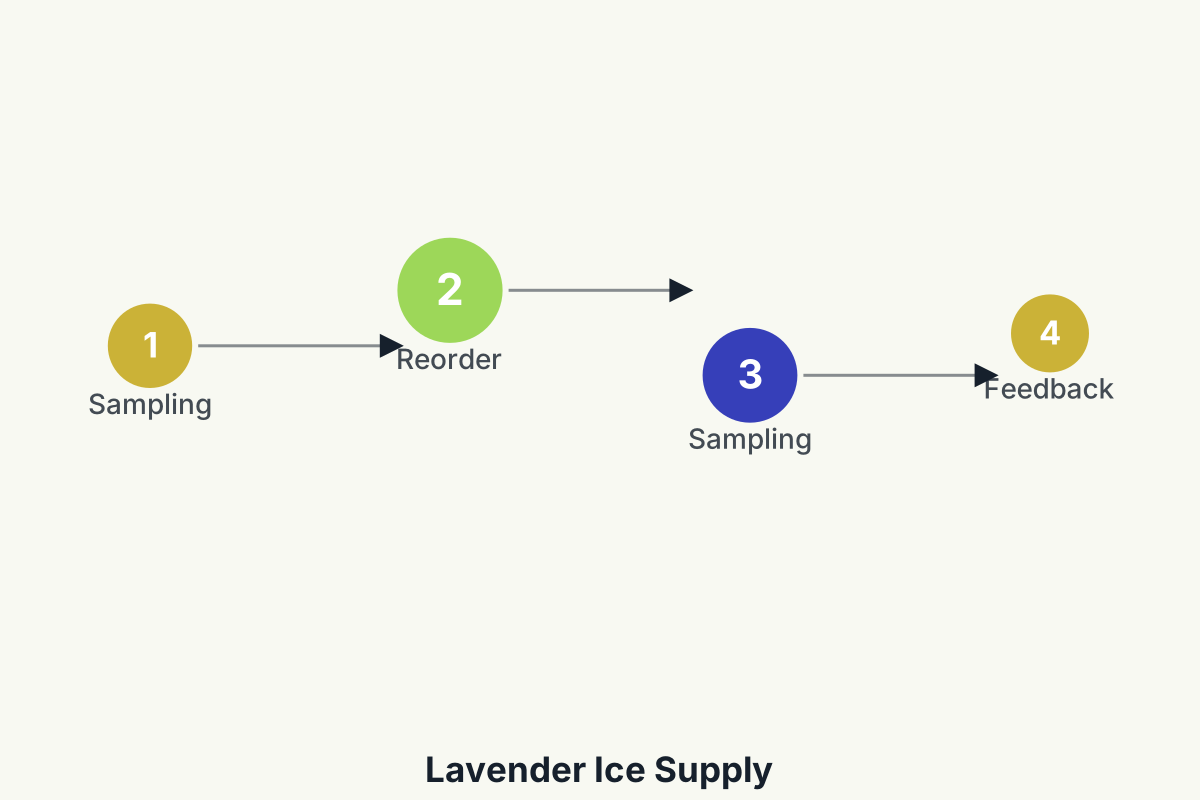
- Keep sealed retained samples from every production batch.
- Write the complaint threshold into the order terms.
- Ask how the factory measures puff count, then compare like with like.
- Agree the tolerance band in writing before approving artwork.
- Model landed cost, not ex-works price, when comparing quotes.
Frequently Asked Questions
How do you handle a short shipment?
Cartons are counted and weighed before dispatch and the figures are shared with you. If something is short on arrival, the packing record and the carrier documentation are both available, which keeps the claim straightforward.
What if I only need a small first order?
That is normal and sensible. A mixed carton lets you test lavender ice in your own market before committing to a production run, and the specification you approve at that stage carries through to larger orders unchanged.
What if a batch does not match the sample?
Keep the retained samples from the approval stage. If a delivered batch measurably differs, we compare against the retained set and resolve it against the production record. This is why we insist on sealed retained units from every run.
Do you hold stock for regular customers?
For established programmes we can reserve production slots and, in some cases, hold finished lavender ice stock against a forecast. It removes most of the lead time risk from a reorder and is worth discussing once volumes are stable.
Next Step
Questions that are not answered here are usually the interesting ones. Reach out with the specifics of your market and we will answer with numbers rather than adjectives.
Related Reading
- Negotiating Lavender Ice Contracts With Overseas Factories — Tight Margin Categories
- Lavender Ice Electronic Data Interchange for Large Accounts — New Distributors
- Lavender Ice Finish Options and Perceived Quality — the Buying Desk
- Lavender Ice Child Resistant Closure Considerations — Warehouse Teams
- Lavender Ice Print Methods for Cartons and Labels — Warehouse Teams
- Lavender Ice Packaging Formats That Reduce Damage Claims — Updated for 2026