 VapeWholesaleHub
Lavender Ice Safety Stock Levels for Import Programmes — Latin America
There is a version of lavender ice that sells through in six weeks and a version that sits in a back room for a year. The difference is rarely obvious from a product photo. Below is the checklist our team uses when a distributor asks us to quote lavender ice for the first time.
Getting Lavender Ice to Your Warehouse
Model lavender ice freight both ways before choosing a method: cost per unit and cost per week of delay. The second figure is the one that decides whether a cheap option was actually cheap.
Modelling a Healthy Margin
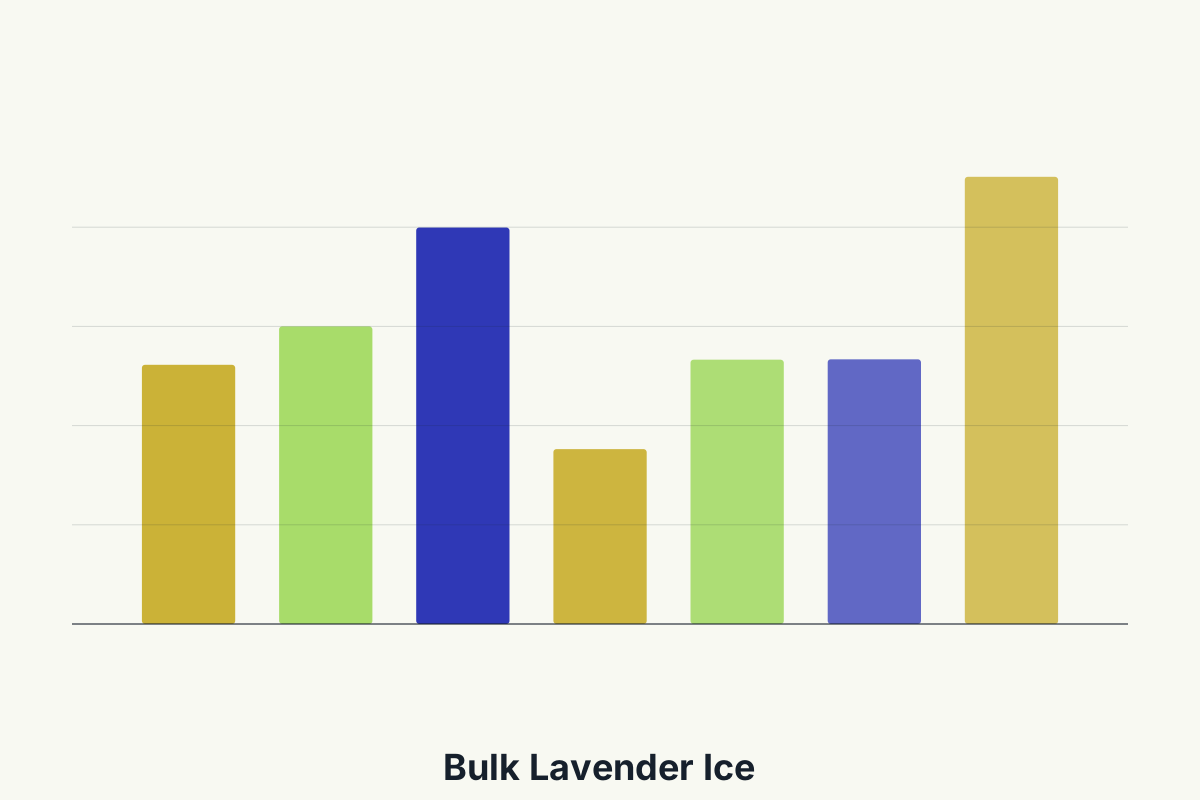
Tiered pricing works best when the tiers match real customer behaviour. Most lavender ice buyers will take the second tier if the step is modest and the third tier only if they can see a genuine reason to hold more stock.
Margin on lavender ice is rarely lost at the till. It is lost through dead stock, returns and emergency air freight. A slightly higher landed cost with predictable lead time usually beats the cheapest quote on the spreadsheet.
Indicative reference points for planning purposes: entry tier from USD 2.17 per unit at 1000 units, mid tier at USD 0.93, and volume tier at USD 1.37 for full container quantities. These figures move with specification, packaging and freight, so treat them as a shape rather than a quote.
What to Fix Before Approving Lavender Ice
Two specifications that matter more than buyers expect: the seal integrity after a drop test and the consistency of the draw from first use to last. Both are measurable before you commit to volume.
A written lavender ice specification should be short enough to read in a minute and precise enough to argue about. If a factory cannot confirm a number in writing, assume the number is whatever is cheapest that week.
| Product category | Refillable kit |
|---|---|
| Resistance band | 0.6 - 0.8 ohm |
| Capacity tolerance | +/- 3% |
| Puff count method | Declared by capacity |
| Master carton | 120 units |
| Carton weight | 7.2 kg |
| Shelf life | 18 months |
| Storage | 15-25 C, dry, away from direct light |
Trends Worth Watching
Flavour cycles in lavender ice are shortening, which argues for smaller test orders and faster feedback loops rather than large speculative buys on a predicted winner.
Quality Control in Practice
Incoming inspection for lavender ice is not about opening boxes at random. We weigh a sample of cartons, check batch codes against the production record, run a draw resistance measurement, and log the results so that a complaint three months later can be traced to a specific run.
- Model landed cost, not ex-works price, when comparing quotes.
- Keep sealed retained samples from every production batch.
- Rotate stock by batch code rather than by delivery date.
- Confirm the current customs classification with your own broker.
- Agree the tolerance band in writing before approving artwork.
Where Lavender Ice Sits in the Range
Think about where lavender ice sits in your customer's week. If it is a weekly restock, breadth matters less than availability. If it is an occasional treat, flavour range and display story carry more weight.
One useful exercise: list every lavender ice line you stock and mark the last date each one sold at full price. Anything without a recent full price sale is taking space from something that would use it better.
Practical Checklist
- Agree the tolerance band in writing before approving artwork.
- Rotate stock by batch code rather than by delivery date.
- Start with a mixed carton and let your own sell-through decide.
- Keep sealed retained samples from every production batch.
- Model landed cost, not ex-works price, when comparing quotes.
- Confirm the current customs classification with your own broker.
Frequently Asked Questions
How should lavender ice be stored?
Cool, dry and out of direct sunlight. Heat and light are the two things that shorten shelf life fastest. Rotate stock by batch code rather than by arrival date, and keep cartons off concrete floors in humid warehouses.
What if a batch does not match the sample?
Keep the retained samples from the approval stage. If a delivered batch measurably differs, we compare against the retained set and resolve it against the production record. This is why we insist on sealed retained units from every run.
How are price changes handled on repeat orders?
{K} pricing is reviewed against input costs and volume rather than adjusted casually. Any change is confirmed in writing before the next order is scheduled, with the reason stated so you can judge it yourself.
Can you match an existing product I already sell?
Often yes, provided we can measure it properly. Send a physical sample and we will report back on what can be matched, what will differ slightly, and why. An honest gap is more useful than a vague promise.
Next Step
Start smaller than feels comfortable, measure honestly, then scale what worked. That sequence has saved more of our customers money than any negotiation tactic we could suggest.
Related Reading
- Lavender Ice Factory Visit Preparation Checklist — Three Price Tiers
- Lavender Ice Market Demand: Reading the Numbers — Private Label Programmes
- Lavender Ice Pallet Configuration for Mixed Orders — Low Minimum Quantities
- Lavender Ice Component Sourcing Behind the Finished Unit — Regional Distributors
- Lavender Ice Warranty Claims Workflow — Low Minimum Quantities
- Pricing Lavender Ice for Healthy Retail Margins — 2026 Buyer Notes