 VapeWholesaleHub
Lavender Ice Insurance Valuation for Held Stock — Repeat Orders
Buying lavender ice wholesale is a logistics problem disguised as a product problem. The unit is small, the margin depends on freight density, and the failure mode shows up weeks after delivery. The notes below come from real orders we have shipped.
Selling Lavender Ice at Store Level
On shelf, lavender ice sells on clarity. A plain shelf talker that states strength and flavour in two words outperforms a beautifully designed but vague display, because most purchase decisions here take under ten seconds.
Logistics That Protect Margin
Air freight makes sense for a first lavender ice order when you need to test demand quickly, but almost every steady programme moves to sea freight once volumes stabilise. Planning that switch early avoids a painful margin squeeze later.
Where Demand Is Heading
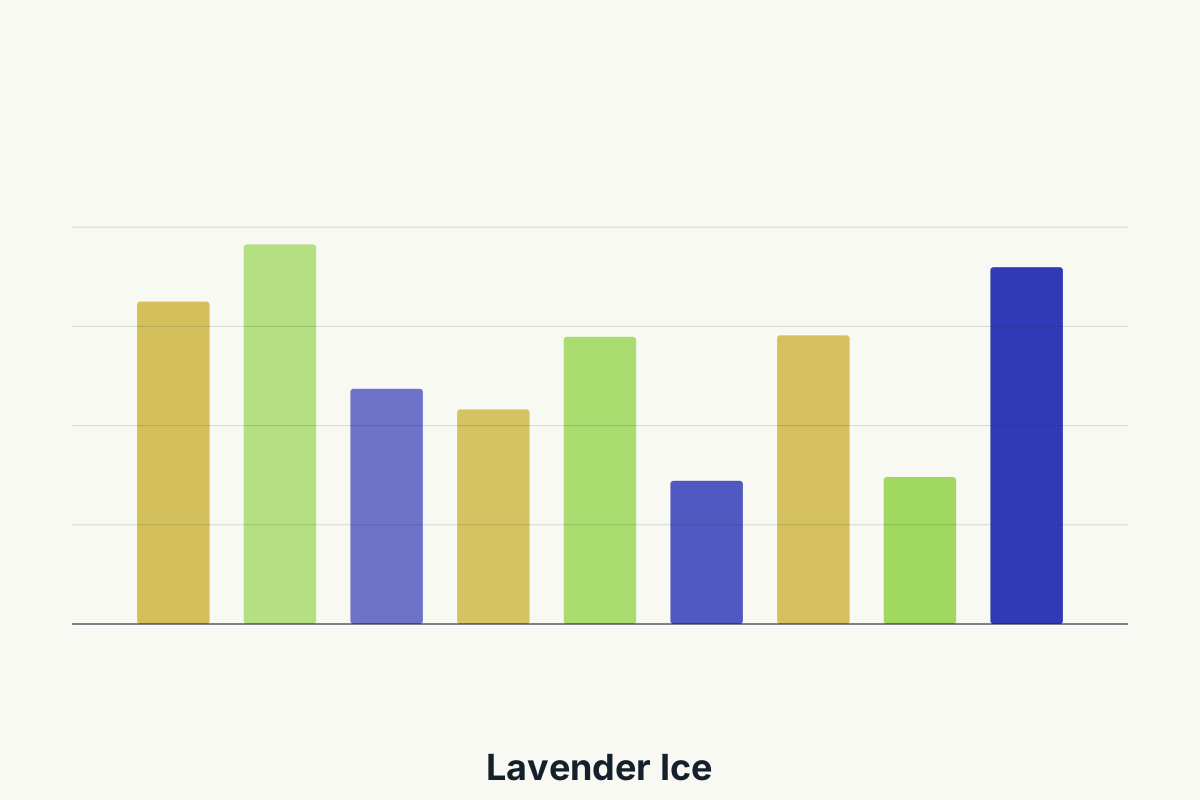
Flavour cycles in lavender ice are shortening, which argues for smaller test orders and faster feedback loops rather than large speculative buys on a predicted winner.
Assortment rationalisation is the quiet trend in this category. Shops that cut their lavender ice range from twelve lines to five well chosen ones often report higher total sales, not lower.
Quality Control in Practice
The defect rate that matters is the one your customer experiences, not the one the factory reports. Bridge that gap by inspecting the way a customer would open the box, not the way a line worker packs it.
- Keep sealed retained samples from every production batch.
- Model landed cost, not ex-works price, when comparing quotes.
- Agree the tolerance band in writing before approving artwork.
- Rotate stock by batch code rather than by delivery date.
- Start with a mixed carton and let your own sell-through decide.
Pricing and Margin
Build lavender ice price tiers around order sizes your customers actually place. Tiers that only make sense on a spreadsheet get ignored, and you end up discounting ad hoc instead.
Build lavender ice price tiers around order sizes your customers actually place. Tiers that only make sense on a spreadsheet get ignored, and you end up discounting ad hoc instead.
Indicative reference points for planning purposes: entry tier from USD 1.48 per unit at 1000 units, mid tier at USD 1.48, and volume tier at USD 0.79 for full container quantities. These figures move with specification, packaging and freight, so treat them as a shape rather than a quote.
The Specification That Matters
Specification sheets are where a lavender ice deal is won or quietly lost. Two samples can look and taste the same while using different coil wire, different wicking density and different tolerances on the mouthpiece. Those details decide how the unit behaves in week three rather than minute three.
| Product category | Refillable kit |
|---|---|
| Resistance band | 0.6 - 0.8 ohm |
| Capacity tolerance | +/- 3% |
| Puff count method | Declared by capacity |
| Master carton | 200 units |
| Carton weight | 10.7 kg |
| Shelf life | 18 months |
| Storage | 15-25 C, dry, away from direct light |
Practical Checklist
- Rotate stock by batch code rather than by delivery date.
- Ask how the factory measures puff count, then compare like with like.
- Agree the tolerance band in writing before approving artwork.
- Check carton dimensions against your freight quote before confirming.
- Model landed cost, not ex-works price, when comparing quotes.
- Confirm the current customs classification with your own broker.
Frequently Asked Questions
Can I visit the production facility?
Yes, and we encourage it for larger programmes. Visits are most useful when you already have a draft specification, because you can then check the specific processes behind the numbers you care about.
Is there support for in-store material?
Yes. Shelf talkers, counter cards and simple planogram suggestions are available for lavender ice ranges that reach a sensible volume. Most retailers find the plain strength and flavour cards do the most work.
Do you hold stock for regular customers?
For established programmes we can reserve production slots and, in some cases, hold finished lavender ice stock against a forecast. It removes most of the lead time risk from a reorder and is worth discussing once volumes are stable.
What information do you need to quote?
Target specification, approximate quantity, destination and any packaging requirement. With those four we can usually come back with a costed option the same working day rather than a request for more information.
Next Step
If you take one thing from this page, take the retained sample habit. It costs a few units per batch and it is the difference between a disagreement and a decision.
Related Reading
- How Lavender Ice Performs in Different Climate Conditions — Three Price Tiers
- Testing Lavender Ice Consistency Across Three Batches — the Buying Desk
- Lavender Ice Child Resistant Closure Considerations — EU Markets
- Lavender Ice Buyer FAQ for First Time Importers — Tight Margin Categories
- Lavender Ice Insurance Valuation for Held Stock — Retail Chains
- Lavender Ice Market Demand: Reading the Numbers — Warehouse Teams