 VapeWholesaleHub
Lavender Ice Emissions and Leak Testing Methods — 2026 Edition
Retailers rarely lose money on lavender ice because of price. They lose money because the first container was bought on a photograph. This page walks through what actually matters when you source lavender ice at scale, written from the buying desk rather than the marketing department.
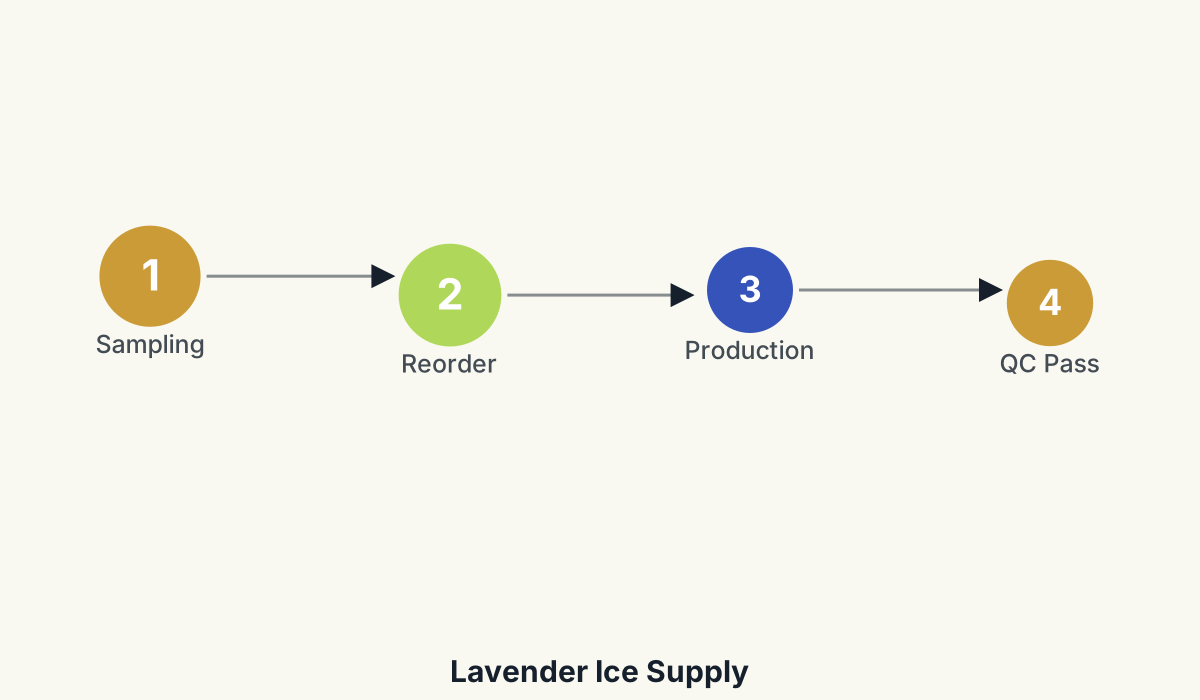
Quality Control in Practice
The cheapest quality control step is a retained sample. Keeping three sealed units from every lavender ice batch costs almost nothing and turns any dispute into a simple comparison instead of an argument over photographs.
Keep a photo record of every lavender ice approval sample. Written descriptions age badly; a dated photograph next to a delivered unit settles most arguments in seconds.
- Check carton dimensions against your freight quote before confirming.
- Write the complaint threshold into the order terms.
- Plan the switch from air to sea freight before you need it.
- Model landed cost, not ex-works price, when comparing quotes.
- Rotate stock by batch code rather than by delivery date.
Freight, Customs and Timing
Customs classification for lavender ice varies by market and changes from time to time. We ship with full documentation, but your broker should confirm the current code before your first order rather than after it lands.
Merchandising and Listing Tips
Online, the listing for lavender ice should answer three questions without scrolling: what it is, how strong it is, and what it tastes like. Everything else belongs further down the page.
Rotate lavender ice facing rather than price for the first month. Visibility changes sell-through more reliably than a small discount, and it does not train customers to wait for offers.
The Specification That Matters
A written lavender ice specification should be short enough to read in a minute and precise enough to argue about. If a factory cannot confirm a number in writing, assume the number is whatever is cheapest that week.
Two specifications that matter more than buyers expect: the seal integrity after a drop test and the consistency of the draw from first use to last. Both are measurable before you commit to volume.
| Product category | Disposable |
|---|---|
| Resistance band | 0.6 - 0.8 ohm |
| Capacity tolerance | +/- 3% |
| Puff count method | Declared by capacity |
| Master carton | 200 units |
| Carton weight | 10.0 kg |
| Shelf life | 18 months |
| Storage | 15-25 C, dry, away from direct light |
What Lavender Ice Really Costs Landed
Tiered pricing works best when the tiers match real customer behaviour. Most lavender ice buyers will take the second tier if the step is modest and the third tier only if they can see a genuine reason to hold more stock.
Build lavender ice price tiers around order sizes your customers actually place. Tiers that only make sense on a spreadsheet get ignored, and you end up discounting ad hoc instead.
Indicative reference points for planning purposes: entry tier from USD 1.63 per unit at 500 units, mid tier at USD 1.55, and volume tier at USD 0.83 for full container quantities. These figures move with specification, packaging and freight, so treat them as a shape rather than a quote.
How Lavender Ice Fits the Assortment
A tight lavender ice range with deep availability usually outsells a wide range with thin stock. Customers who find their line in stock come back; customers who are told to wait do not.
Practical Checklist
- Ask how the factory measures puff count, then compare like with like.
- Plan the switch from air to sea freight before you need it.
- Model landed cost, not ex-works price, when comparing quotes.
- Check carton dimensions against your freight quote before confirming.
- Rotate stock by batch code rather than by delivery date.
- Agree the tolerance band in writing before approving artwork.
Frequently Asked Questions
How should lavender ice be stored?
Cool, dry and out of direct sunlight. Heat and light are the two things that shorten shelf life fastest. Rotate stock by batch code rather than by arrival date, and keep cartons off concrete floors in humid warehouses.
What happens if my market changes its rules?
Regulations move, and packaging or documentation sometimes has to follow. We keep approved artwork files on hand so that a required change is a reprint rather than a redesign, which keeps the cost and delay down.
Can I mix strengths in one order?
In most cases yes, as long as each strength meets the minimum run length. Mixed strength cartons are popular with retailers building their first display because they show the full ladder without over committing.
How are price changes handled on repeat orders?
{K} pricing is reviewed against input costs and volume rather than adjusted casually. Any change is confirmed in writing before the next order is scheduled, with the reason stated so you can judge it yourself.
What if a batch does not match the sample?
Keep the retained samples from the approval stage. If a delivered batch measurably differs, we compare against the retained set and resolve it against the production record. This is why we insist on sealed retained units from every run.
Next Step
If you are comparing options right now, send us the specification you have been quoted elsewhere. A side by side reading usually shows where the price difference actually comes from, and that is the most useful first conversation to have.
Related Reading
- Lavender Ice Communication Cadence With Overseas Suppliers — EU Markets
- Lavender Ice Strengths Ladder for a Balanced Cabinet — High Volume Buyers
- Lavender Ice Review Mining for Product Insight — EU Markets
- Lavender Ice Storage Life Extension Through Better Handling — EU Markets
- Lavender Ice Approval Workflow From Sample to Shipment — Wholesale Clubs
- Lavender Ice Currency and Payment Risk Basics — Updated for 2026