 VapeWholesaleHub
Lavender Ice Currency and Payment Risk Basics — the Buying Desk
Buyers often ask us to explain why two lavender ice samples that look identical behave differently after a month. The answer is almost always tolerance control, and it is more interesting than it sounds.
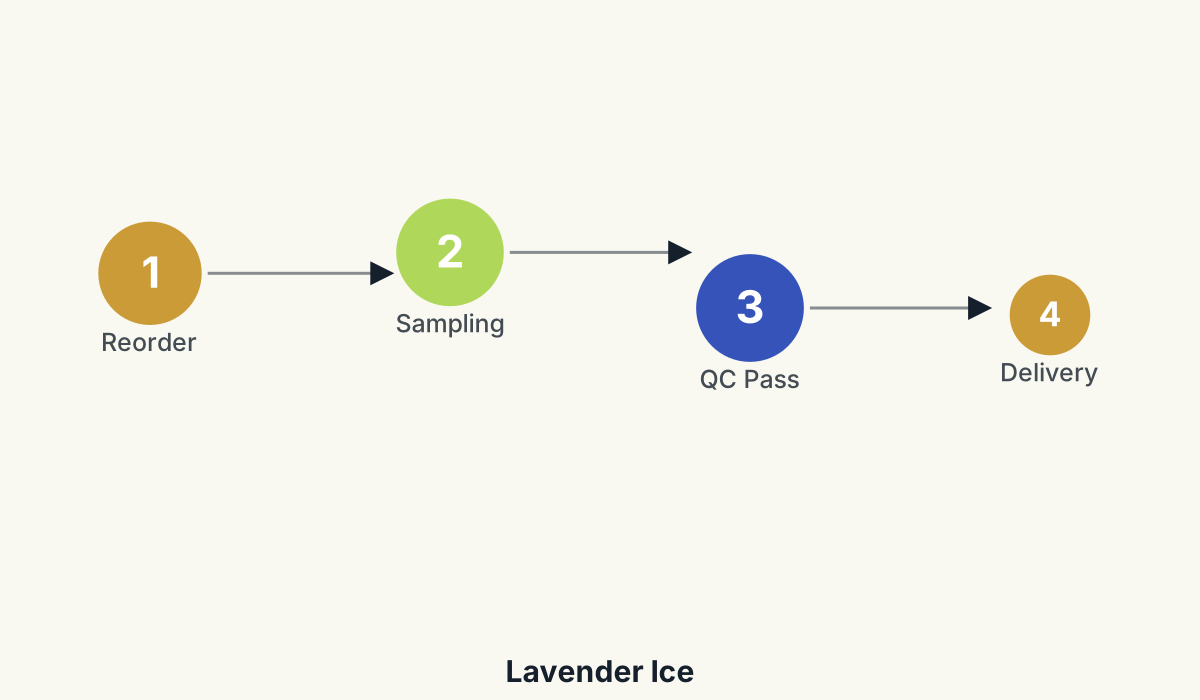
How Lavender Ice Fits the Assortment
Lavender Ice rewards retailers who can explain it in one sentence. If your team needs a paragraph, the range is too complicated for the space it occupies.
What Lavender Ice Really Costs Landed
The cheapest lavender ice quote is rarely the cheapest outcome. Add freight, defect handling, delay risk and the staff time spent chasing, then compare again. The ranking often changes.
Indicative reference points for planning purposes: entry tier from USD 1.03 per unit at 500 units, mid tier at USD 1.10, and volume tier at USD 0.81 for full container quantities. These figures move with specification, packaging and freight, so treat them as a shape rather than a quote.
Market Signals
The lavender ice category is consolidating around suppliers who can document what they ship. Buyers who built that requirement into their process early are now finding it much easier to scale.
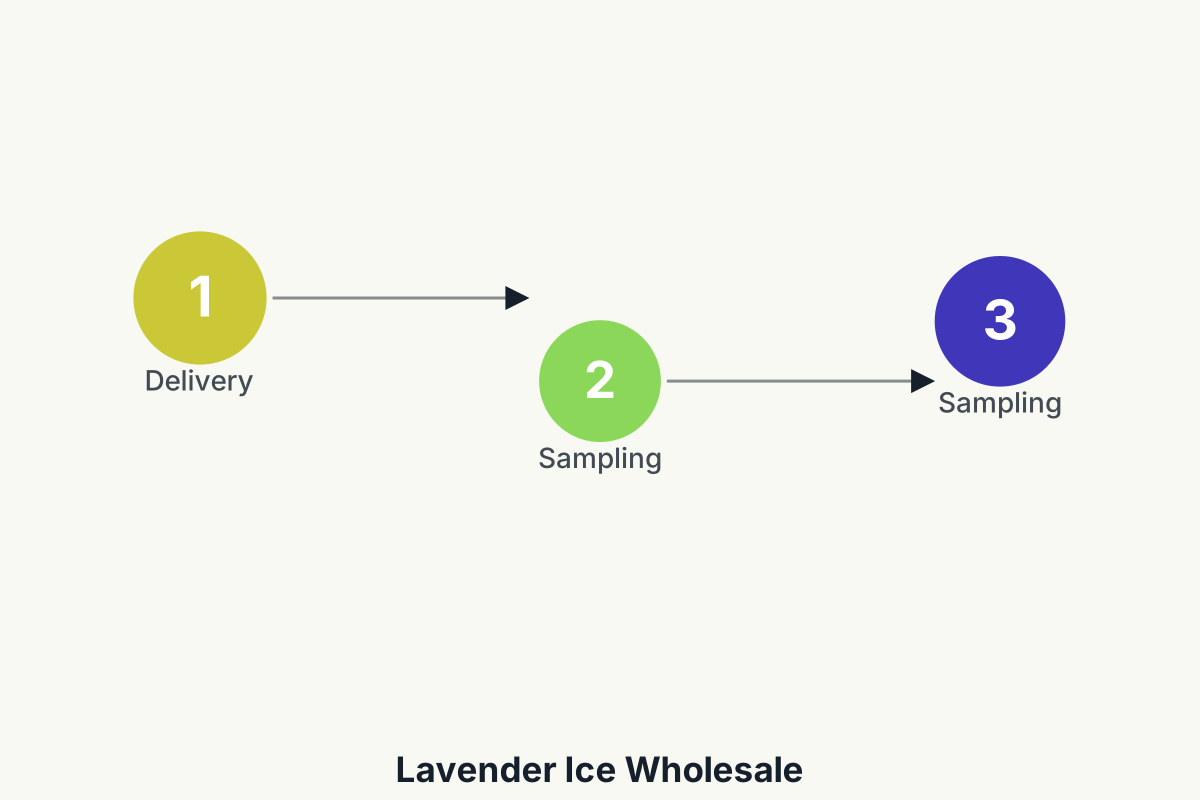
Getting Lavender Ice to Your Warehouse
Consolidating lavender ice with other lines is often the biggest single saving available to a mid size importer. The unit cost does not change but the landed cost does, sometimes materially.
Air freight makes sense for a first lavender ice order when you need to test demand quickly, but almost every steady programme moves to sea freight once volumes stabilise. Planning that switch early avoids a painful margin squeeze later.
Inspection Before Dispatch
Incoming inspection for lavender ice is not about opening boxes at random. We weigh a sample of cartons, check batch codes against the production record, run a draw resistance measurement, and log the results so that a complaint three months later can be traced to a specific run.
Most defects in lavender ice are not dramatic. They are loose tolerances, a slightly thin seal, a mouthpiece that clicks. Left alone they turn into leak complaints, which are the single most common reason a retailer drops a line.
- Rotate stock by batch code rather than by delivery date.
- Ask how the factory measures puff count, then compare like with like.
- Agree the tolerance band in writing before approving artwork.
- Start with a mixed carton and let your own sell-through decide.
- Plan the switch from air to sea freight before you need it.
Practical Checklist
- Model landed cost, not ex-works price, when comparing quotes.
- Agree the tolerance band in writing before approving artwork.
- Plan the switch from air to sea freight before you need it.
- Confirm the current customs classification with your own broker.
- Keep sealed retained samples from every production batch.
- Write the complaint threshold into the order terms.
Frequently Asked Questions
How are price changes handled on repeat orders?
{K} pricing is reviewed against input costs and volume rather than adjusted casually. Any change is confirmed in writing before the next order is scheduled, with the reason stated so you can judge it yourself.
Do you provide compliance documents?
Every shipment leaves with the documentation set relevant to your market, including batch records and test reports where required. Your local rules still determine what you must file, so confirm those with your broker before import.
What if a batch does not match the sample?
Keep the retained samples from the approval stage. If a delivered batch measurably differs, we compare against the retained set and resolve it against the production record. This is why we insist on sealed retained units from every run.
What happens if my market changes its rules?
Regulations move, and packaging or documentation sometimes has to follow. We keep approved artwork files on hand so that a required change is a reprint rather than a redesign, which keeps the cost and delay down.
Next Step
Whatever you decide, decide it against numbers you can check on arrival. That single discipline removes most of the risk from importing lavender ice.
Related Reading
- Lavender Ice Emissions and Leak Testing Methods — 2026 Edition
- Lavender Ice Warehouse Picking and Batch Rotation — Updated for 2026
- Lavender Ice Handling, Labeling and Regulatory Paperwork — Low Minimum Quantities
- Lavender Ice Emissions and Leak Testing Methods — Plain Language
- Lavender Ice Promotional Mechanics That Do Not Erode Value — Before Your Next Order
- Lavender Ice Tamper Evidence and Seal Integrity — High Volume Buyers