 VapeWholesaleHub
Lavender Ice Case Study: From First Pallet to Repeat Container — Mixed Cabinets
Everything below applies whether you are ordering one mixed carton or a full container. The numbers scale, but the logic does not change, which is the point of writing it down once.
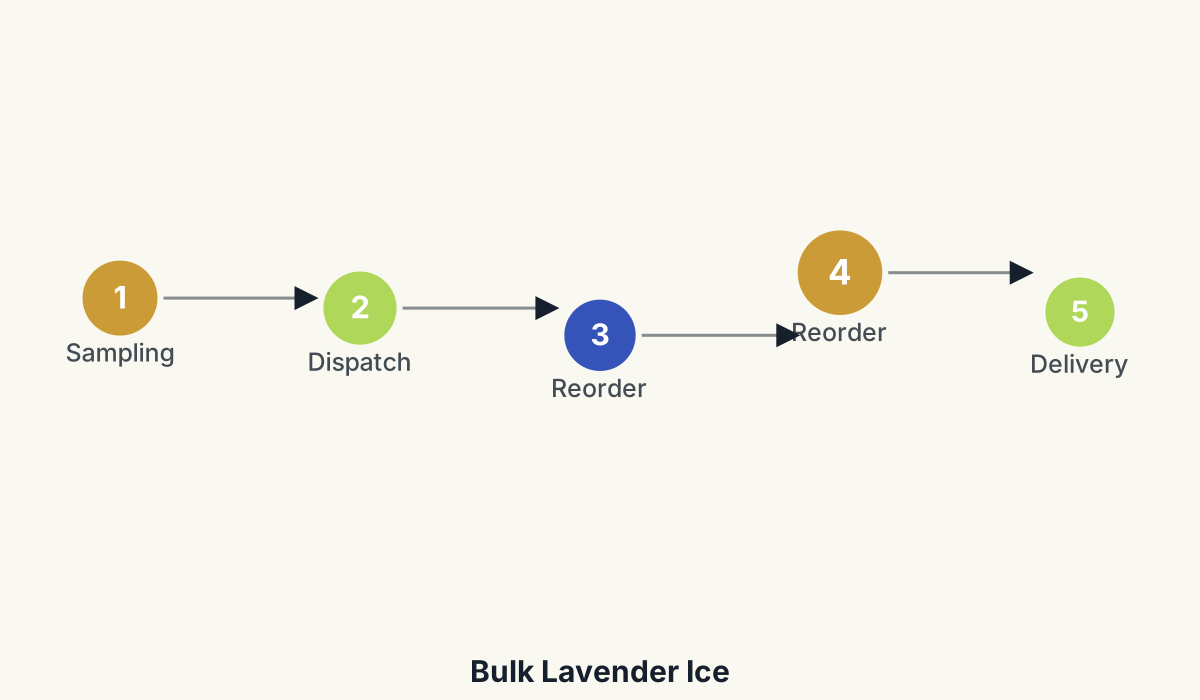
Quality Control in Practice
The cheapest quality control step is a retained sample. Keeping three sealed units from every lavender ice batch costs almost nothing and turns any dispute into a simple comparison instead of an argument over photographs.
- Model landed cost, not ex-works price, when comparing quotes.
- Keep sealed retained samples from every production batch.
- Confirm the current customs classification with your own broker.
- Ask how the factory measures puff count, then compare like with like.
- Start with a mixed carton and let your own sell-through decide.
Logistics That Protect Margin
Split lavender ice shipments across two sailings when the order is large enough. It costs slightly more but removes the risk of a single event wiping out a full quarter of stock.
Pricing and Margin
Margin on lavender ice is rarely lost at the till. It is lost through dead stock, returns and emergency air freight. A slightly higher landed cost with predictable lead time usually beats the cheapest quote on the spreadsheet.
When you model lavender ice pricing, build in a realistic shrink figure. Even a well run line loses a small percentage to damage, expiry and sampling. Pretending that number is zero is how a healthy looking margin turns negative.
Indicative reference points for planning purposes: entry tier from USD 2.13 per unit at 1000 units, mid tier at USD 0.71, and volume tier at USD 0.55 for full container quantities. These figures move with specification, packaging and freight, so treat them as a shape rather than a quote.
What to Fix Before Approving Lavender Ice
When we write a lavender ice specification with a distributor, we fix four things first: the resistance band, the liquid capacity tolerance, the puff count methodology and the packaging master carton. Everything else can flex without changing the customer experience.
| Product category | Disposable |
|---|---|
| Resistance band | 0.6 - 0.8 ohm |
| Capacity tolerance | +/- 5% |
| Puff count method | Machine cycle 2s on / 18s off |
| Master carton | 200 units |
| Carton weight | 9.2 kg |
| Shelf life | 18 months |
| Storage | 15-25 C, dry, away from direct light |
How Lavender Ice Fits the Assortment
A tight lavender ice range with deep availability usually outsells a wide range with thin stock. Customers who find their line in stock come back; customers who are told to wait do not.
Range decisions for lavender ice should start from shelf space, not from a supplier catalogue. Count the facings you actually have, then decide how many of them this line deserves against what it currently earns.
Practical Checklist
- Plan the switch from air to sea freight before you need it.
- Start with a mixed carton and let your own sell-through decide.
- Check carton dimensions against your freight quote before confirming.
- Ask how the factory measures puff count, then compare like with like.
- Write the complaint threshold into the order terms.
- Agree the tolerance band in writing before approving artwork.
Frequently Asked Questions
What if I only need a small first order?
That is normal and sensible. A mixed carton lets you test lavender ice in your own market before committing to a production run, and the specification you approve at that stage carries through to larger orders unchanged.
How long does a lavender ice order take to arrive?
Production typically takes ten to eighteen working days after artwork approval, and transit depends on the method you choose. Air express is fastest, sea freight is cheapest at volume. We confirm both at quotation so there is no surprise later.
What if a batch does not match the sample?
Keep the retained samples from the approval stage. If a delivered batch measurably differs, we compare against the retained set and resolve it against the production record. This is why we insist on sealed retained units from every run.
How are price changes handled on repeat orders?
{K} pricing is reviewed against input costs and volume rather than adjusted casually. Any change is confirmed in writing before the next order is scheduled, with the reason stated so you can judge it yourself.
Do you provide compliance documents?
Every shipment leaves with the documentation set relevant to your market, including batch records and test reports where required. Your local rules still determine what you must file, so confirm those with your broker before import.
Next Step
We would rather quote you accurately and lose the order than quote optimistically and lose the relationship. Ask us the awkward questions early.
Related Reading
- Lavender Ice Promotional Mechanics That Do Not Erode Value — Before Your Next Order
- Lavender Ice Forecasting Without Historical Data — EU Markets
- Lavender Ice Case Study: From First Pallet to Repeat Container — Updated for 2026
- Lavender Ice Shelf Rotation for Multi Site Retailers — North America
- Lavender Ice Auditing Your Own Supply Chain — Latin America
- Lavender Ice Regulatory Change Monitoring — New Distributors