 VapeWholesaleHub
Lavender Ice Bundle Pricing That Moves Older Stock — Step by Step
Retailers rarely lose money on lavender ice because of price. They lose money because the first container was bought on a photograph. This page walks through what actually matters when you source lavender ice at scale, written from the buying desk rather than the marketing department.
How Lavender Ice Fits the Assortment
One useful exercise: list every lavender ice line you stock and mark the last date each one sold at full price. Anything without a recent full price sale is taking space from something that would use it better.
Reading a Lavender Ice Spec Sheet
Specification sheets are where a lavender ice deal is won or quietly lost. Two samples can look and taste the same while using different coil wire, different wicking density and different tolerances on the mouthpiece. Those details decide how the unit behaves in week three rather than minute three.
| Product category | Accessory |
|---|---|
| Resistance band | 1.0 - 1.2 ohm |
| Capacity tolerance | +/- 3% |
| Puff count method | Declared by capacity |
| Master carton | 100 units |
| Carton weight | 11.4 kg |
| Shelf life | 12 months |
| Storage | 15-25 C, dry, away from direct light |
Freight, Customs and Timing
Consolidating lavender ice with other lines is often the biggest single saving available to a mid size importer. The unit cost does not change but the landed cost does, sometimes materially.
Track lavender ice landed cost per unit as a running number, including duty and local delivery. It is the only figure that tells you whether a supplier change actually improved anything.
Pricing and Margin
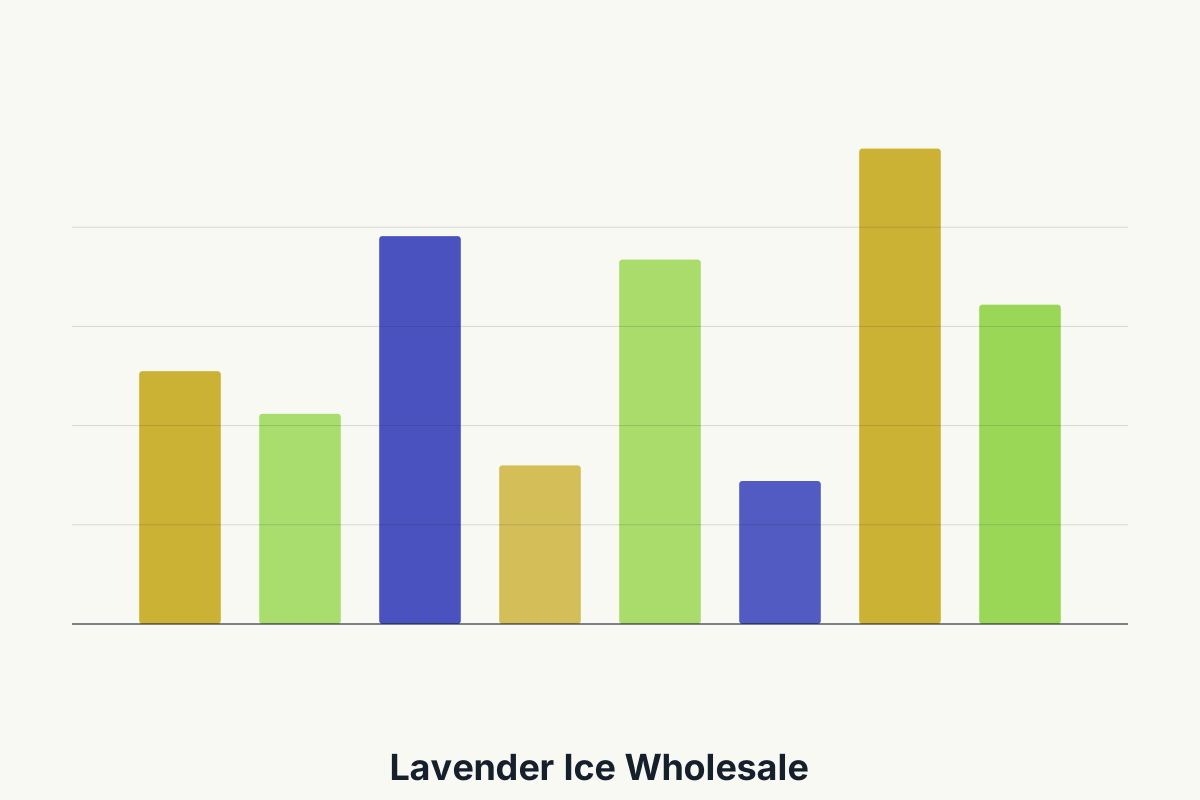
Tiered pricing works best when the tiers match real customer behaviour. Most lavender ice buyers will take the second tier if the step is modest and the third tier only if they can see a genuine reason to hold more stock.
Build lavender ice price tiers around order sizes your customers actually place. Tiers that only make sense on a spreadsheet get ignored, and you end up discounting ad hoc instead.
Indicative reference points for planning purposes: entry tier from USD 2.24 per unit at 1000 units, mid tier at USD 1.44, and volume tier at USD 1.27 for full container quantities. These figures move with specification, packaging and freight, so treat them as a shape rather than a quote.
Where Demand Is Heading
Assortment rationalisation is the quiet trend in this category. Shops that cut their lavender ice range from twelve lines to five well chosen ones often report higher total sales, not lower.
Practical Checklist
- Rotate stock by batch code rather than by delivery date.
- Check carton dimensions against your freight quote before confirming.
- Agree the tolerance band in writing before approving artwork.
- Model landed cost, not ex-works price, when comparing quotes.
- Keep sealed retained samples from every production batch.
- Write the complaint threshold into the order terms.
Frequently Asked Questions
What if a batch does not match the sample?
Keep the retained samples from the approval stage. If a delivered batch measurably differs, we compare against the retained set and resolve it against the production record. This is why we insist on sealed retained units from every run.
How do you handle a short shipment?
Cartons are counted and weighed before dispatch and the figures are shared with you. If something is short on arrival, the packing record and the carrier documentation are both available, which keeps the claim straightforward.
Can you match an existing product I already sell?
Often yes, provided we can measure it properly. Send a physical sample and we will report back on what can be matched, what will differ slightly, and why. An honest gap is more useful than a vague promise.
What happens if my market changes its rules?
Regulations move, and packaging or documentation sometimes has to follow. We keep approved artwork files on hand so that a required change is a reprint rather than a redesign, which keeps the cost and delay down.
Do you hold stock for regular customers?
For established programmes we can reserve production slots and, in some cases, hold finished lavender ice stock against a forecast. It removes most of the lead time risk from a reorder and is worth discussing once volumes are stable.
Next Step
Start smaller than feels comfortable, measure honestly, then scale what worked. That sequence has saved more of our customers money than any negotiation tactic we could suggest.
Related Reading
- Lavender Ice Sell Through Tracking Without Expensive Tools — Repeat Orders
- Lavender Ice Customer Education That Reduces Complaints — Southeast Asia
- Merchandising Lavender Ice Inside a Physical Store — Updated for 2026
- Lavender Ice vs Standard Alternatives: What Changes for Your Shelf — the Buying Desk
- Sustainability and Take Back Programmes for Lavender Ice — Container-Scale Orders
- Lavender Ice vs Standard Alternatives: What Changes for Your Shelf — Oceania