 VapeWholesaleHub
Lavender Ice Benchmarking Two Factories Side by Side — Tight Margin Categories
A lavender ice programme fails in predictable ways: a specification nobody wrote down, a sample nobody retained, and a lead time nobody stress tested. Here is how to close those three gaps before they cost you a container.
What Lavender Ice Really Costs Landed
The cheapest lavender ice quote is rarely the cheapest outcome. Add freight, defect handling, delay risk and the staff time spent chasing, then compare again. The ranking often changes.
Watch the lavender ice price you pay over a year rather than per order. Factories respond well to visible volume, and a quarterly review is usually worth more than a hard negotiation each time.
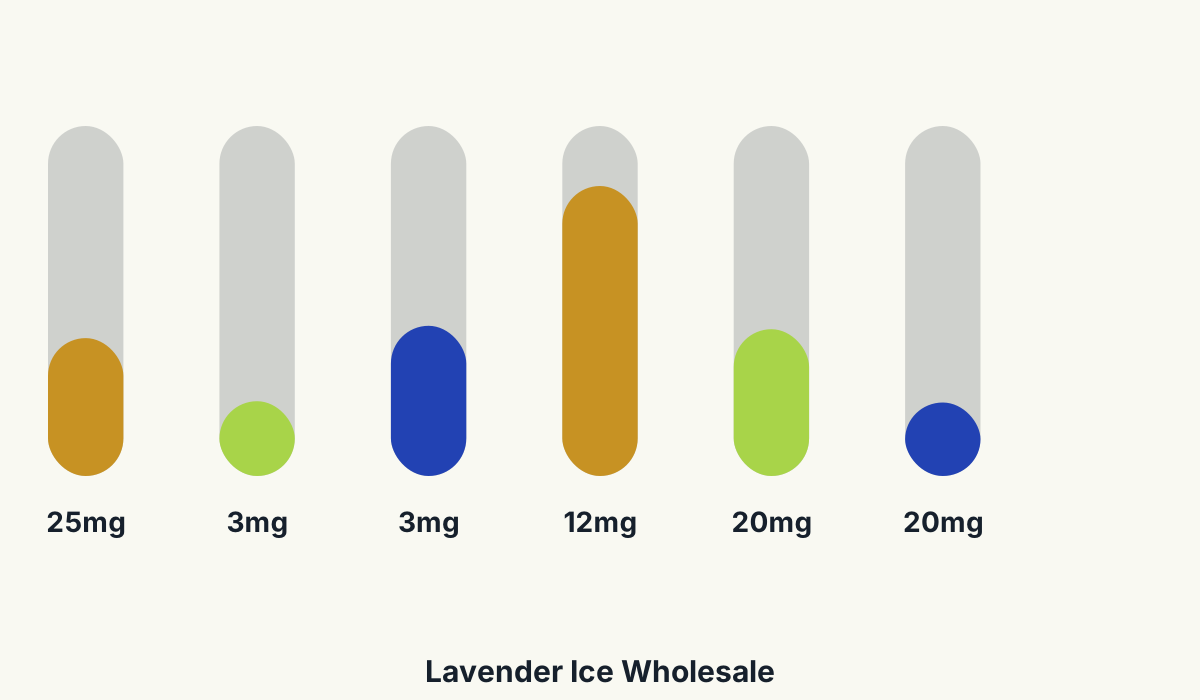
Indicative reference points for planning purposes: entry tier from USD 2.25 per unit at 500 units, mid tier at USD 1.09, and volume tier at USD 0.71 for full container quantities. These figures move with specification, packaging and freight, so treat them as a shape rather than a quote.
Merchandising and Listing Tips
Online, shoot lavender ice at a consistent scale across the range. Customers compare by eye, and inconsistent product photography creates returns that have nothing to do with the product.
Rotate lavender ice facing rather than price for the first month. Visibility changes sell-through more reliably than a small discount, and it does not train customers to wait for offers.
What to Fix Before Approving Lavender Ice
Two specifications that matter more than buyers expect: the seal integrity after a drop test and the consistency of the draw from first use to last. Both are measurable before you commit to volume.
Ask any factory for the same lavender ice sample twice, three months apart. If the second sample drifts, the production line is running without statistical control and your reviews will drift with it. Consistency over time is a more useful signal than a single good sample.
| Product category | Closed pod |
|---|---|
| Resistance band | 1.0 - 1.2 ohm |
| Capacity tolerance | +/- 5% |
| Puff count method | Machine cycle 2s on / 18s off |
| Master carton | 100 units |
| Carton weight | 9.2 kg |
| Shelf life | 24 months |
| Storage | 15-25 C, dry, away from direct light |
How Lavender Ice Fits the Assortment
One useful exercise: list every lavender ice line you stock and mark the last date each one sold at full price. Anything without a recent full price sale is taking space from something that would use it better.
Range decisions for lavender ice should start from shelf space, not from a supplier catalogue. Count the facings you actually have, then decide how many of them this line deserves against what it currently earns.
Inspection Before Dispatch
Keep a photo record of every lavender ice approval sample. Written descriptions age badly; a dated photograph next to a delivered unit settles most arguments in seconds.
- Plan the switch from air to sea freight before you need it.
- Ask how the factory measures puff count, then compare like with like.
- Model landed cost, not ex-works price, when comparing quotes.
- Keep sealed retained samples from every production batch.
- Confirm the current customs classification with your own broker.
Logistics That Protect Margin
Ask your forwarder for the lavender ice transit history on your lane, not the advertised schedule. The gap between the two is the buffer you should build into your reorder point.
Practical Checklist
- Rotate stock by batch code rather than by delivery date.
- Write the complaint threshold into the order terms.
- Keep sealed retained samples from every production batch.
- Confirm the current customs classification with your own broker.
- Start with a mixed carton and let your own sell-through decide.
- Ask how the factory measures puff count, then compare like with like.
Frequently Asked Questions
What if a batch does not match the sample?
Keep the retained samples from the approval stage. If a delivered batch measurably differs, we compare against the retained set and resolve it against the production record. This is why we insist on sealed retained units from every run.
What does a sample pack usually include?
A typical lavender ice sample pack covers the strengths or variants you are most likely to list, packed so you can evaluate them side by side. Tell us which lines you are considering and we will match the pack to that rather than sending a generic selection.
Can I mix strengths in one order?
In most cases yes, as long as each strength meets the minimum run length. Mixed strength cartons are popular with retailers building their first display because they show the full ladder without over committing.
Can you match an existing product I already sell?
Often yes, provided we can measure it properly. Send a physical sample and we will report back on what can be matched, what will differ slightly, and why. An honest gap is more useful than a vague promise.
Can the packaging be customised?
Yes. Most lavender ice programmes use private label packaging once volumes justify the printing plate. We supply dielines, check your artwork for print issues and hold approved files so reorders need no new setup.
Next Step
If you take one thing from this page, take the retained sample habit. It costs a few units per batch and it is the difference between a disagreement and a decision.
Related Reading
- Lavender Ice Escalation Path When Something Goes Wrong — the Middle East
- Lavender Ice Carton Engineering and Freight Density — Landed Cost Worked Through
- Sustainability and Take Back Programmes for Lavender Ice — Established Chains
- Lavender Ice Product Photography for Listings — Wholesale Clubs
- Lavender Ice Shelf Life, Batch Codes and Traceability — Southeast Asia
- Lavender Ice Pallet Configuration for Mixed Orders — Warehouse Teams