 VapeWholesaleHub
Common Lavender Ice Mistakes New Distributors Make — Repeat Orders
There is a version of lavender ice that sells through in six weeks and a version that sits in a back room for a year. The difference is rarely obvious from a product photo. Below is the checklist our team uses when a distributor asks us to quote lavender ice for the first time.
Pricing and Margin
Margin on lavender ice is rarely lost at the till. It is lost through dead stock, returns and emergency air freight. A slightly higher landed cost with predictable lead time usually beats the cheapest quote on the spreadsheet.
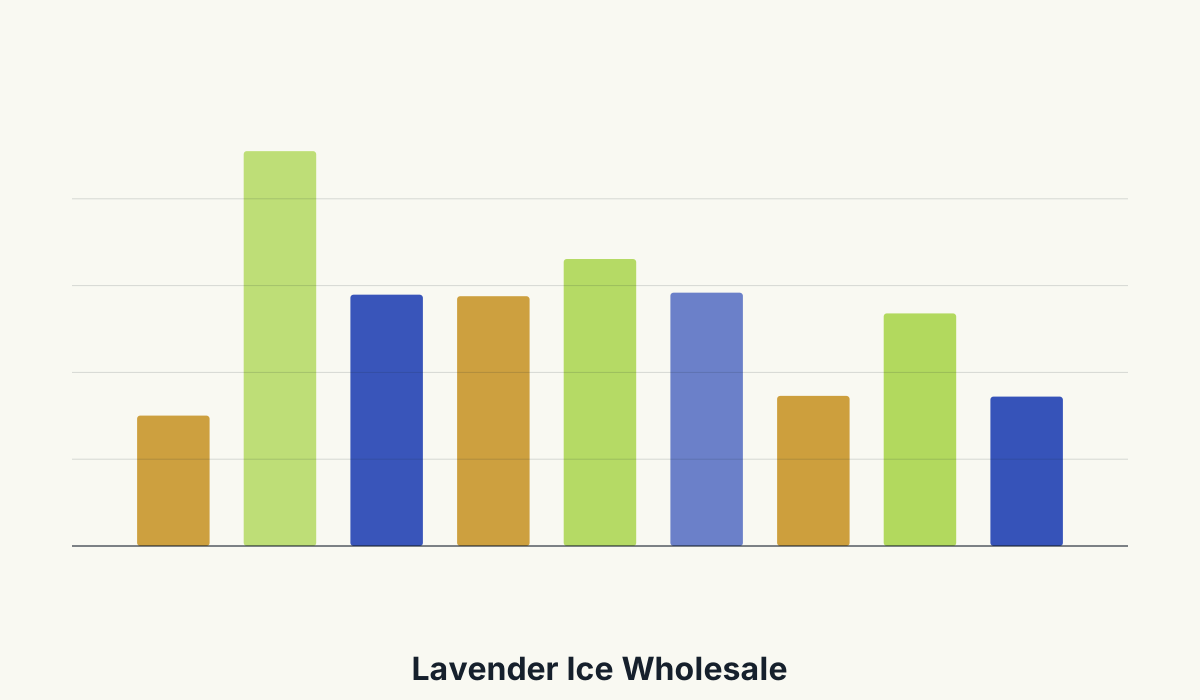
Indicative reference points for planning purposes: entry tier from USD 2.07 per unit at 2000 units, mid tier at USD 0.77, and volume tier at USD 1.36 for full container quantities. These figures move with specification, packaging and freight, so treat them as a shape rather than a quote.
Inspection Before Dispatch
The cheapest quality control step is a retained sample. Keeping three sealed units from every lavender ice batch costs almost nothing and turns any dispute into a simple comparison instead of an argument over photographs.
The defect rate that matters is the one your customer experiences, not the one the factory reports. Bridge that gap by inspecting the way a customer would open the box, not the way a line worker packs it.
- Confirm the current customs classification with your own broker.
- Plan the switch from air to sea freight before you need it.
- Rotate stock by batch code rather than by delivery date.
- Keep sealed retained samples from every production batch.
- Write the complaint threshold into the order terms.
Market Signals
Demand for lavender ice has been steadily rebalancing. The early phase rewarded whoever could ship fastest; the current phase rewards whoever can ship the same thing twice. That shift favours buyers who invest in specification rather than price shopping.
Assortment rationalisation is the quiet trend in this category. Shops that cut their lavender ice range from twelve lines to five well chosen ones often report higher total sales, not lower.
What to Fix Before Approving Lavender Ice
When we write a lavender ice specification with a distributor, we fix four things first: the resistance band, the liquid capacity tolerance, the puff count methodology and the packaging master carton. Everything else can flex without changing the customer experience.
Two specifications that matter more than buyers expect: the seal integrity after a drop test and the consistency of the draw from first use to last. Both are measurable before you commit to volume.
| Product category | Pod system |
|---|---|
| Resistance band | 0.6 - 0.8 ohm |
| Capacity tolerance | +/- 3% |
| Puff count method | Machine cycle 3s on / 27s off |
| Master carton | 240 units |
| Carton weight | 12.4 kg |
| Shelf life | 18 months |
| Storage | 15-25 C, dry, away from direct light |
Where Lavender Ice Sits in the Range
Lavender Ice rewards retailers who can explain it in one sentence. If your team needs a paragraph, the range is too complicated for the space it occupies.
Getting Lavender Ice to Your Warehouse
Air freight makes sense for a first lavender ice order when you need to test demand quickly, but almost every steady programme moves to sea freight once volumes stabilise. Planning that switch early avoids a painful margin squeeze later.
Customs classification for lavender ice varies by market and changes from time to time. We ship with full documentation, but your broker should confirm the current code before your first order rather than after it lands.
Practical Checklist
- Model landed cost, not ex-works price, when comparing quotes.
- Start with a mixed carton and let your own sell-through decide.
- Check carton dimensions against your freight quote before confirming.
- Agree the tolerance band in writing before approving artwork.
- Write the complaint threshold into the order terms.
- Plan the switch from air to sea freight before you need it.
Frequently Asked Questions
What if I only need a small first order?
That is normal and sensible. A mixed carton lets you test lavender ice in your own market before committing to a production run, and the specification you approve at that stage carries through to larger orders unchanged.
Can I mix strengths in one order?
In most cases yes, as long as each strength meets the minimum run length. Mixed strength cartons are popular with retailers building their first display because they show the full ladder without over committing.
Can I visit the production facility?
Yes, and we encourage it for larger programmes. Visits are most useful when you already have a draft specification, because you can then check the specific processes behind the numbers you care about.
How long does a lavender ice order take to arrive?
Production typically takes ten to eighteen working days after artwork approval, and transit depends on the method you choose. Air express is fastest, sea freight is cheapest at volume. We confirm both at quotation so there is no surprise later.
Next Step
Start smaller than feels comfortable, measure honestly, then scale what worked. That sequence has saved more of our customers money than any negotiation tactic we could suggest.
Related Reading
- Lavender Ice Market Demand: Reading the Numbers — Private Label Programmes
- Reducing Returns on Lavender Ice Through Better Specs — the Middle East
- Lavender Ice Regulatory Change Monitoring — Small Batch Buyers
- Lavender Ice Seasonal Peaks and Stock Cover — Latin America
- Lavender Ice Transport Vibration and Pack Protection — Latin America
- Setting Minimum Order Quantities for Lavender Ice — Freight Included